
Wizard Dash
Prodigy Education
Browser based game for elementary aged players
Assignment
Creating a feature that shifts player focus toward answering more math questions
Results:
Number of math questions answered in the game increased significantly
We know that Prodigy is used by teachers as a supplementary learning tool in the classroom, and through interviews with educators, we learned that students who regularly engaged with Prodigy often showed noticeable improvements in their math scores. We also found that when Prodigy was used in class, learning became a more collaborative experience—something teachers viewed as a positive influence on classroom dynamics.
With this in mind, we set out to strengthen Prodigy’s role in the classroom by creating a feature that shifted player focus toward answering more math questions, rather than engaging with other activities in the game world. We also wanted to design an experience that an entire class could participate in together.
The result was Wizard Dash—a board game–style challenge where players race against one another through a series of battle stages. Each stage introduced a unique set of rules to keep gameplay fresh, while maintaining a focus on math engagement.
The Lobby
The Lobby was the first screen players saw when they entered Wizard Dash. At the time of release, there was only one place in the game where players could swap out their team or change their wizard’s gear. The Lobby introduced a new location where players could do both, giving them a chance to make adjustments before heading into battle.
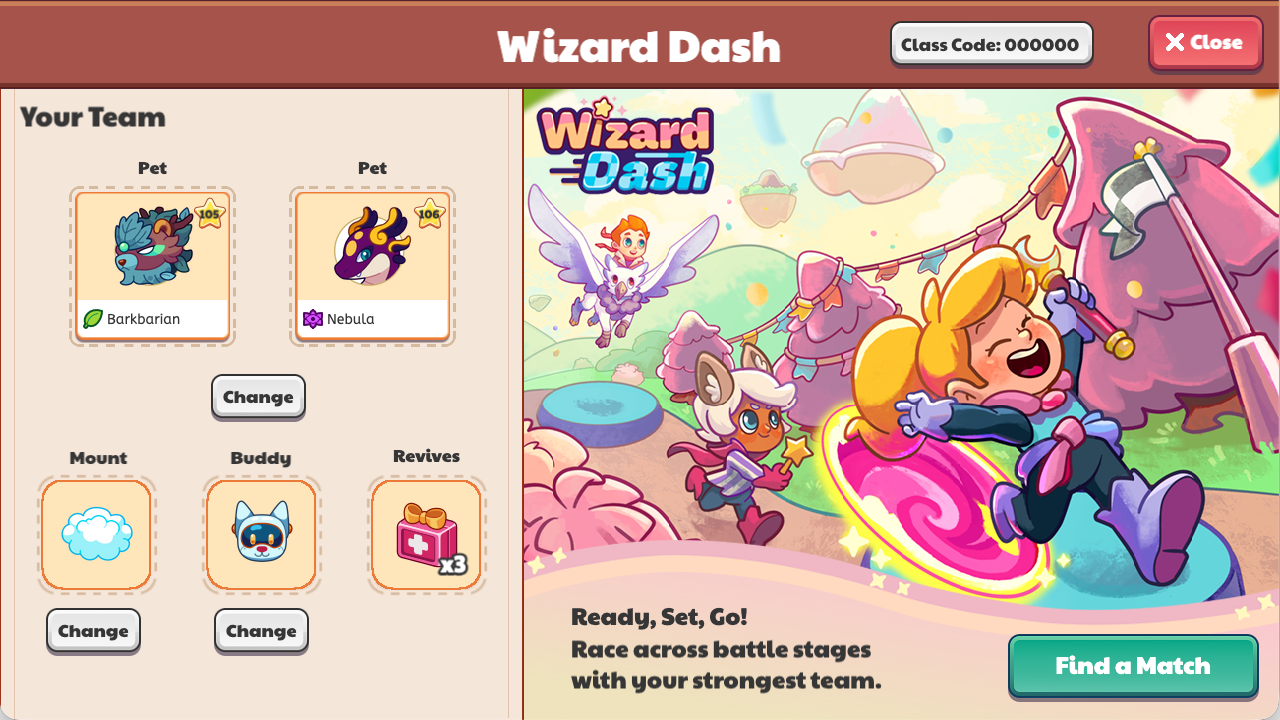
We felt it was important to include these capabilities in the Lobby because there was a mechanic built into Wizard Dash that allowed teachers to automatically pull players into a Class Wizard Dash. In those cases, players wouldn’t have time to make changes beforehand, so the Lobby ensured they always had an opportunity to prepare before a Dash began.
New Game Mechanics and Battle UI
Wizard Dash required us to build several new systems within battles, along with new UI widgets to support them. Because the battle screen had limited space, we had to be intentional about the widgets we added to the battle screen and how much visual weight they carried.
We also carefully considered how much attention players needed to give each system at any given moment. Rather than requiring constant monitoring, we designed these widgets to be easily readable at a glance. Animations and sound effects were used strategically to draw attention during natural breaks in the action, providing quick, timely cues about information that mattered in that moment.
The Game Board and Stage Tracker

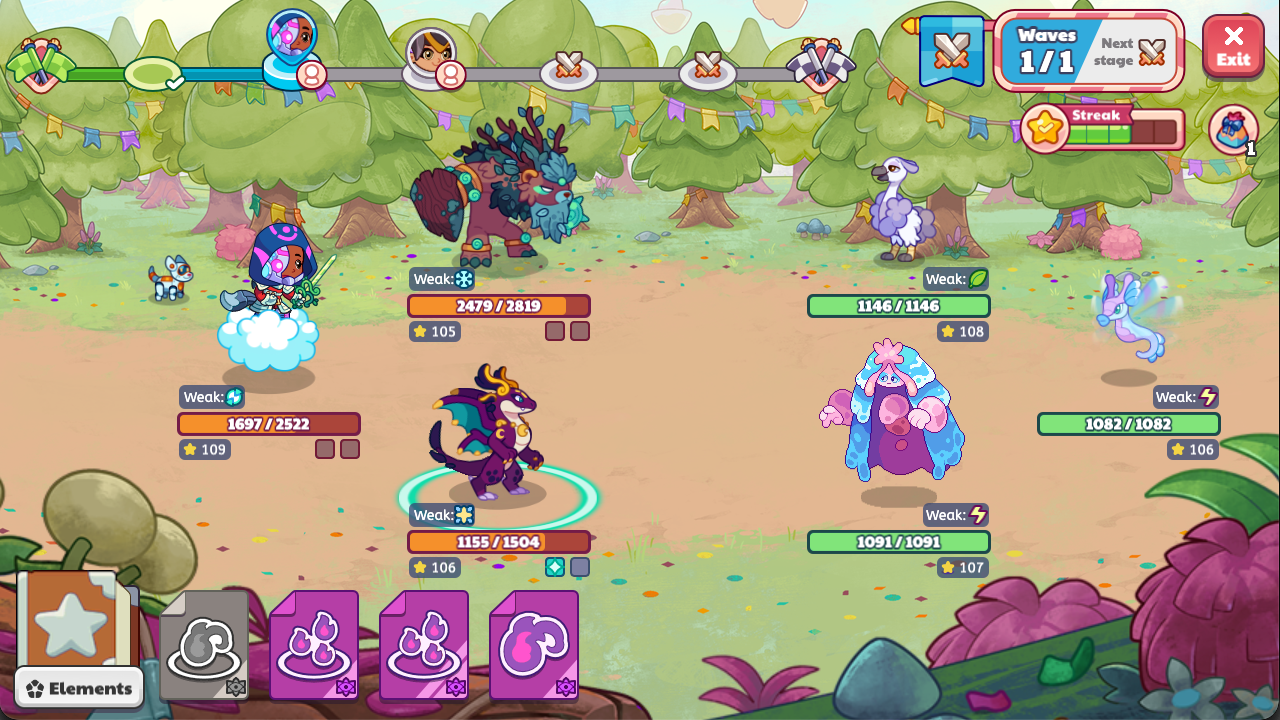
Drawing inspiration from carnival games and traditional board games, we introduced a game board to the battle screen. This board allowed players to track their progress through the race and see how they stacked up against other competitors.
The game board also gave players a preview of the battle types they would encounter at each stage of the race, helping set expectations and reduce uncertainty.

The Stage Tracker provided players with clear information about their current stage in the race. For example, during a wave battle, it displayed the number of waves of enemies remaining for that stage. It also gave players a preview of the upcoming battle type, helping them anticipate what was coming next.
While multiple battle types were planned for the experience, the MVP release supported only one: a simple wave-based battle where players faced up to three waves of enemies per stage.
Math Streak

Some students answer math questions more quickly than others, so it was important for us to encourage players who may not be as math-savvy to stay engaged, regardless of their position in the race.
To support this, we chose to also reward players for strong math performance rather than just speed. For every five math questions a player answered correctly in a row, they were awarded an additional prize. A visual tracker helped make this progress clear, giving players something else to focus on and helping motivate them throughout the race.
Rewards and Celebrations
As this feature was designed to increase engagement with the curriculum, we wanted Wizard Dash to be a positive experience for every player. Whether they finished the race in a top position or didn’t complete the race but still answered enough math questions to earn rewards, our goal was for everyone to leave the experience feeling successful.
To support this, we created four different types of end-of-race celebrations:
1st–3rd place: A full, high-impact celebration
4th–8th place: A slightly scaled-back celebration
Did not finish, but earned rewards: A small celebration acknowledging their effort
Did not finish and earned no rewards: A simple “better luck next time” message
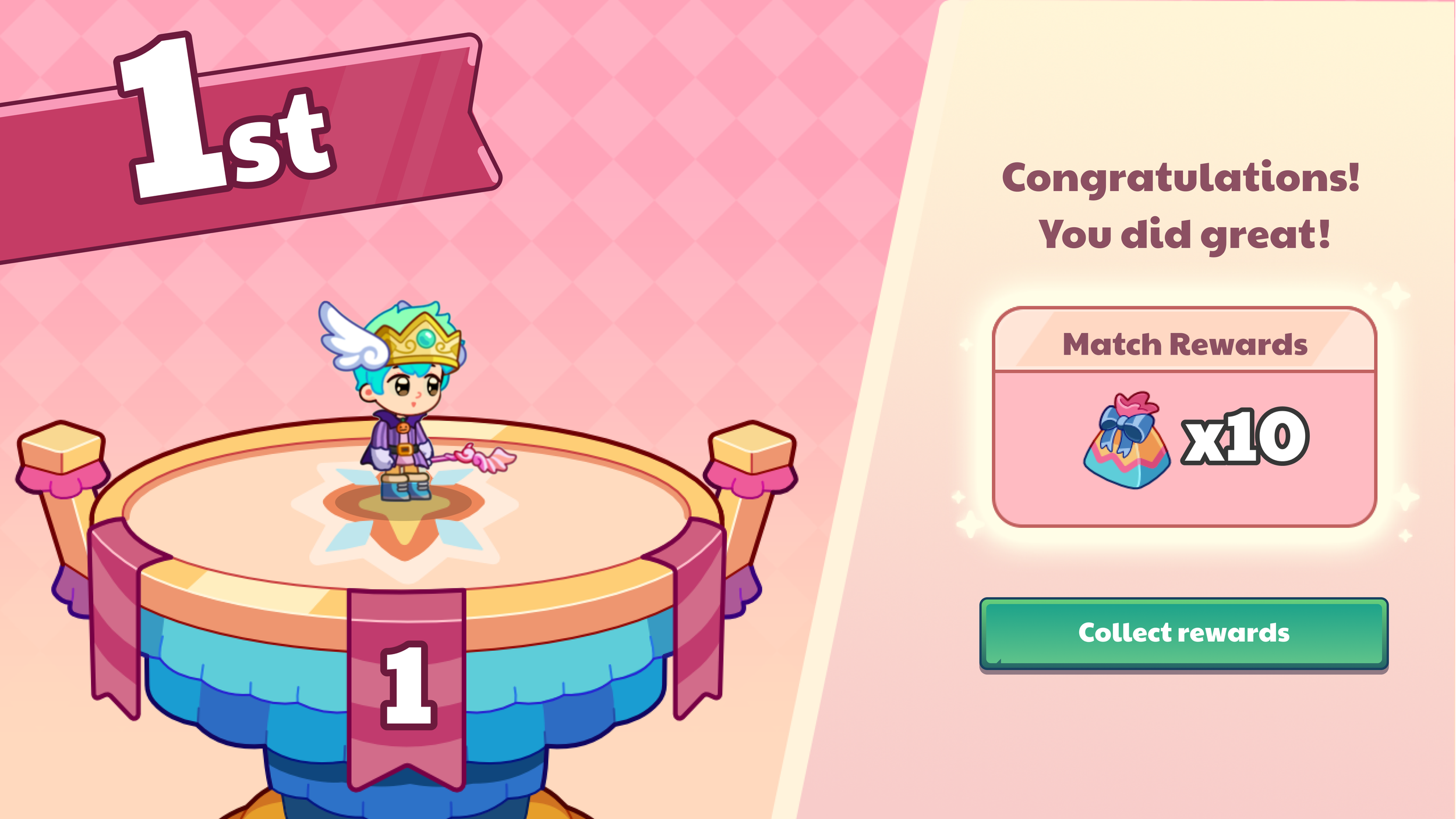
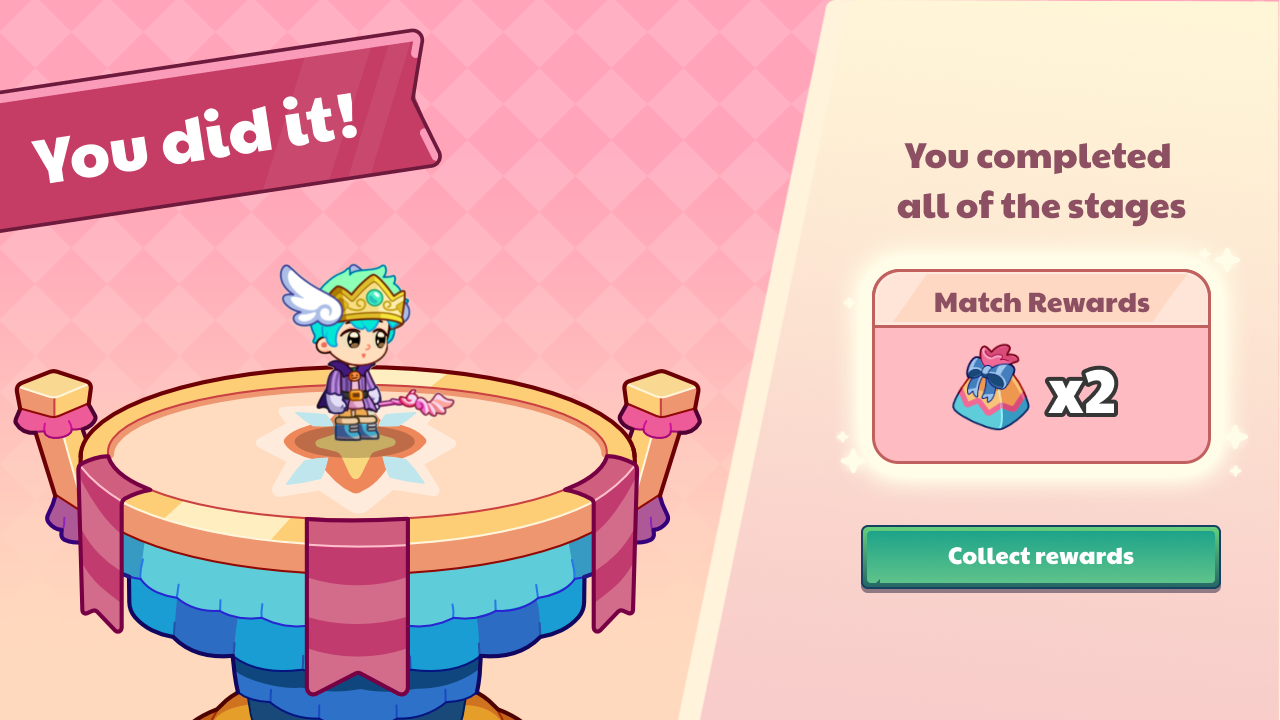
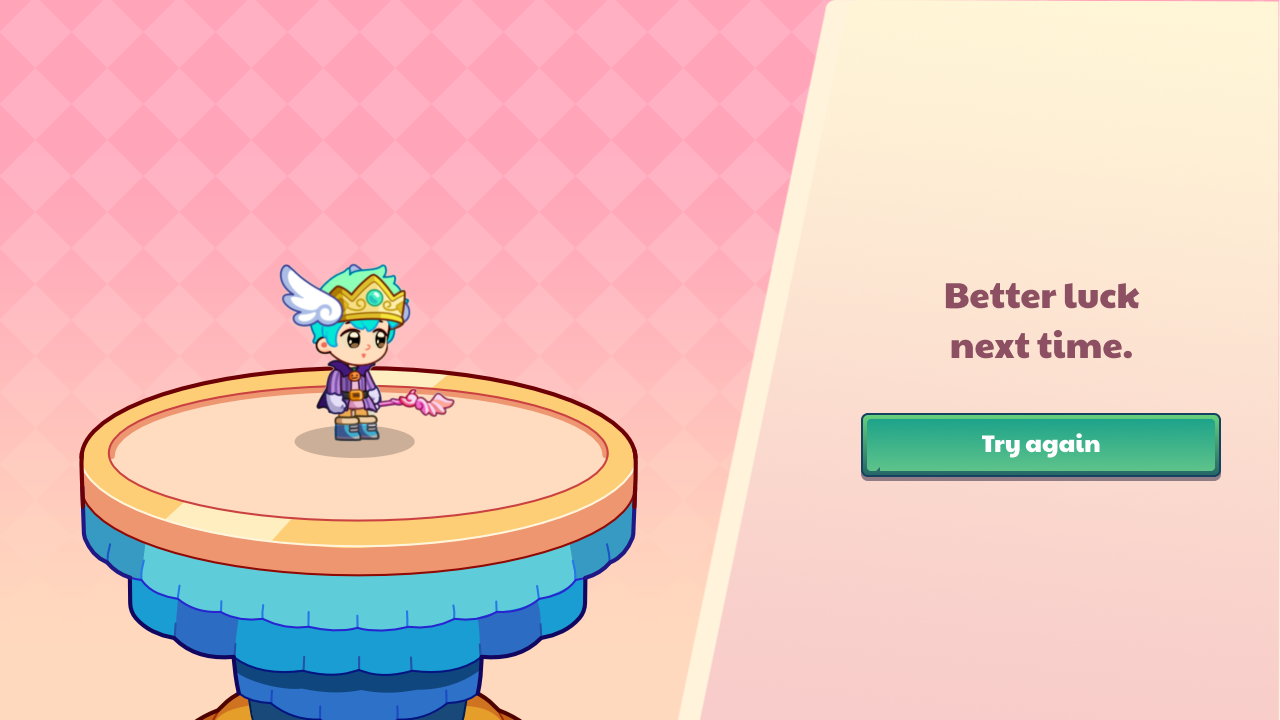
We kept the visuals consistent across all four end-of-race celebrations so the experience always felt familiar and rewarding.
Copy and visual effects—like fireworks and confetti—were scaled to match the player’s finishing position, making every outcome feel celebrated.
This ensured that regardless of where a player finished, they still experienced a sense of achievement and motivation to play Wizard Dash again.
Conclusion
Wizard Dash was a fun and engaging way for players to answer a high volume of math questions while earning meaningful rewards. Initial engagement was strong, and qualitative feedback showed that the feature successfully captured player interest.
However, with average player sessions lasting around 15 minutes, one of the feature’s biggest challenges was the amount of time required to complete a full race.
A single Wizard Dash could take anywhere from 15 to 20 minutes to finish. Several factors contributed to this length, including the number and complexity of math questions, the time spent watching spell-casting animations, and the reliance on wave battles as the only battle type at launch.
In hindsight, introducing a wider variety of stage types, speeding up battle animations, and potentially removing non-essential mechanics from standard battles—such as pet capture—could have reduced race times substantially. This would have made Wizard Dash a more approachable and attractive experience for players with limited time to play.