
The Treasure Track
Prodigy Education
Browser based game for elementary aged players
Assignment
Increase conversion by introducing a battlepass feature to the existing ecosystem
Results:
Membership conversions increased significantly with each iteration of the feature.
The team had seen the success of similar systems in other mobile and console titles and wanted to explore whether a comparable feature could help improve both conversion and retention in Prodigy.
One of our biggest early challenges was player understanding. For a large portion of our audience, Prodigy is one of the first games they’ve ever played. Most successful battle pass systems are designed for much older players, meaning this would be many players’ first exposure to a feature like this. With little to no existing mental model, we needed to both teach players how the system worked and carefully observe how this younger audience’s play patterns should influence the final design.
Phase 1
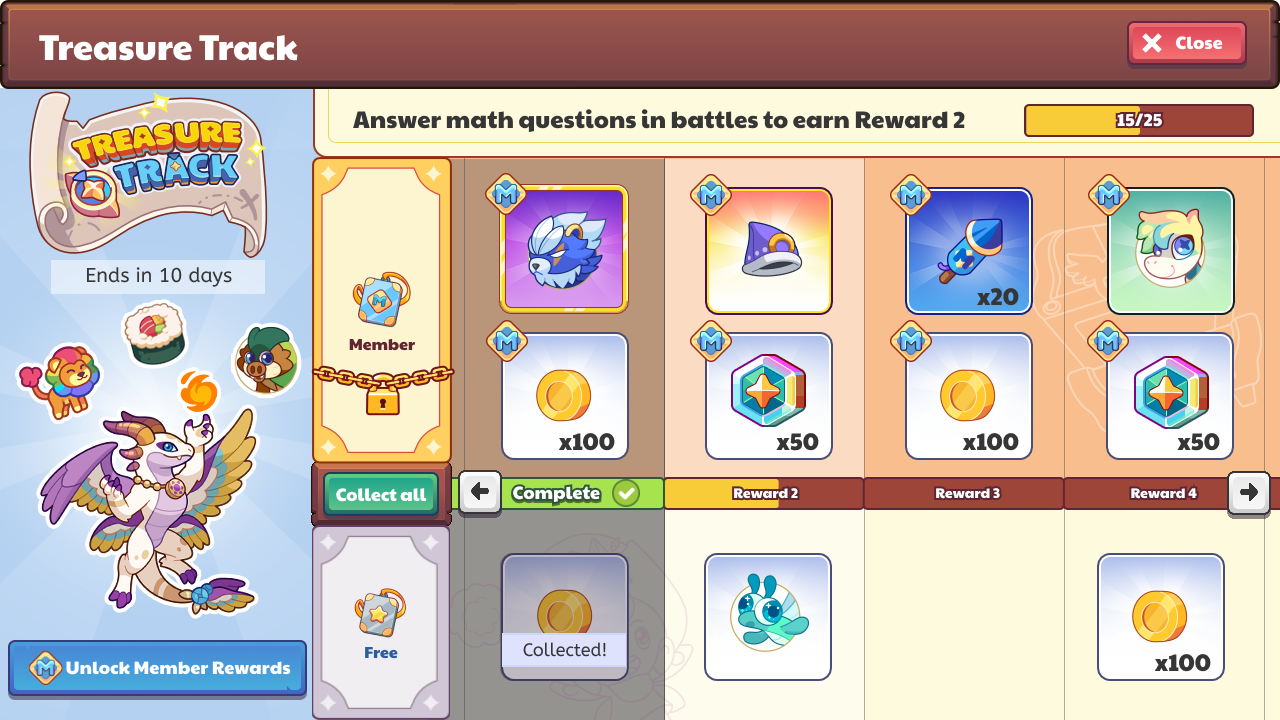
The first iteration of the Treasure Track was intentionally simple. The more math questions a player answered, the more progress they made toward unlocking rewards.
Rewards were split into two tracks: a free track and a member subscribed premium track.
The user flow for this version was a straightforward two-step process:
Answer math questions in battle.
Earn progress towards rewards.
We ran a few short cycles of this iteration and found that players responded positively to the concept. Based on that success the team decided to continue to iterate on the feature to try and move it closer to what’s commonly seen in more successful mobile games.
Phase 2
The second iteration of the Treasure Track saw progression reworked to be quest-based. Instead of earning progress passively by answering questions, players now needed to complete small quests to earn points toward rewards.
This created a more complex, multi-step process for players to understand:
Identify and understand a quest to tackle.
Complete the quest.
Collect quest points to gain progress towards rewards.
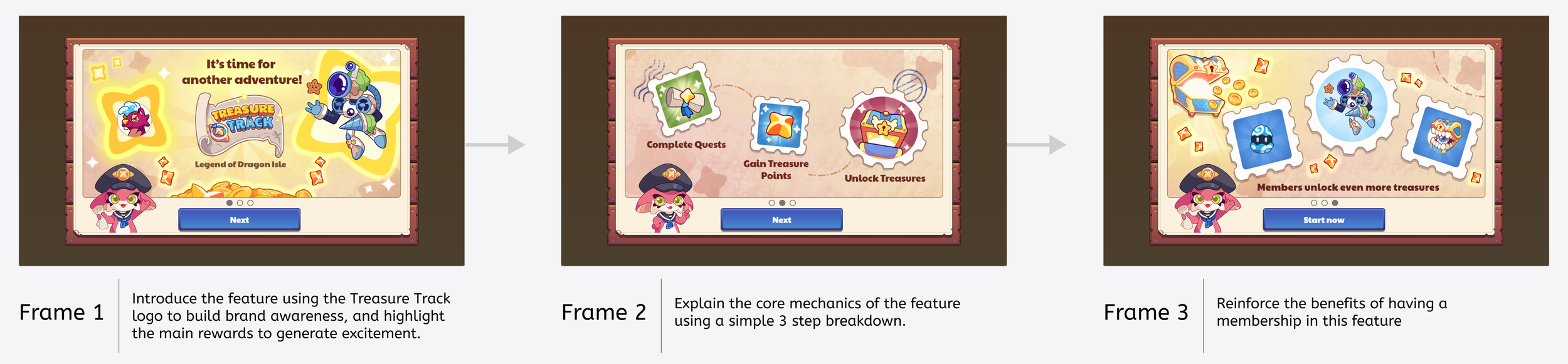
To help players learn this new flow, we introduced a three-frame popup that quickly explained the feature’s core mechanics.
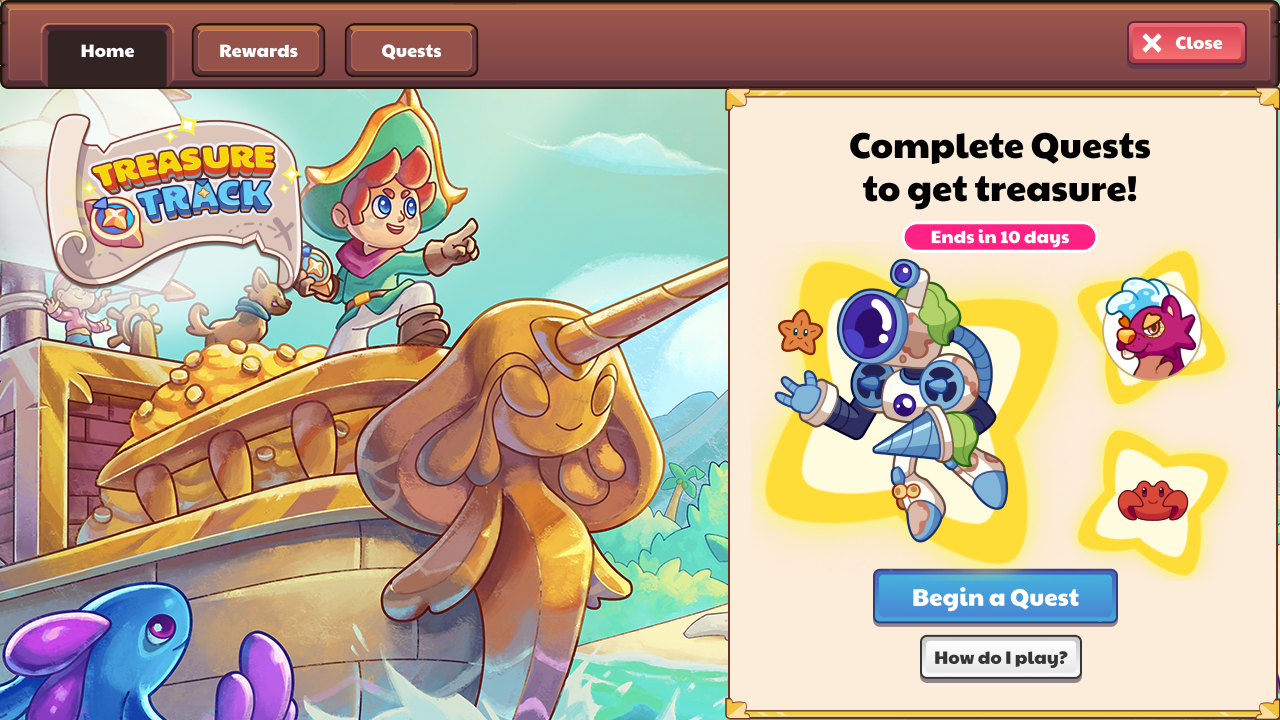
We also added a dedicated Home screen section for the feature, giving players a clear place to return to if they ever forgot what the feature was about or how it worked.
We kept visual changes on the main reward screen to a minimum in order to preserve the feature’s user flow that players seemed to already understand.
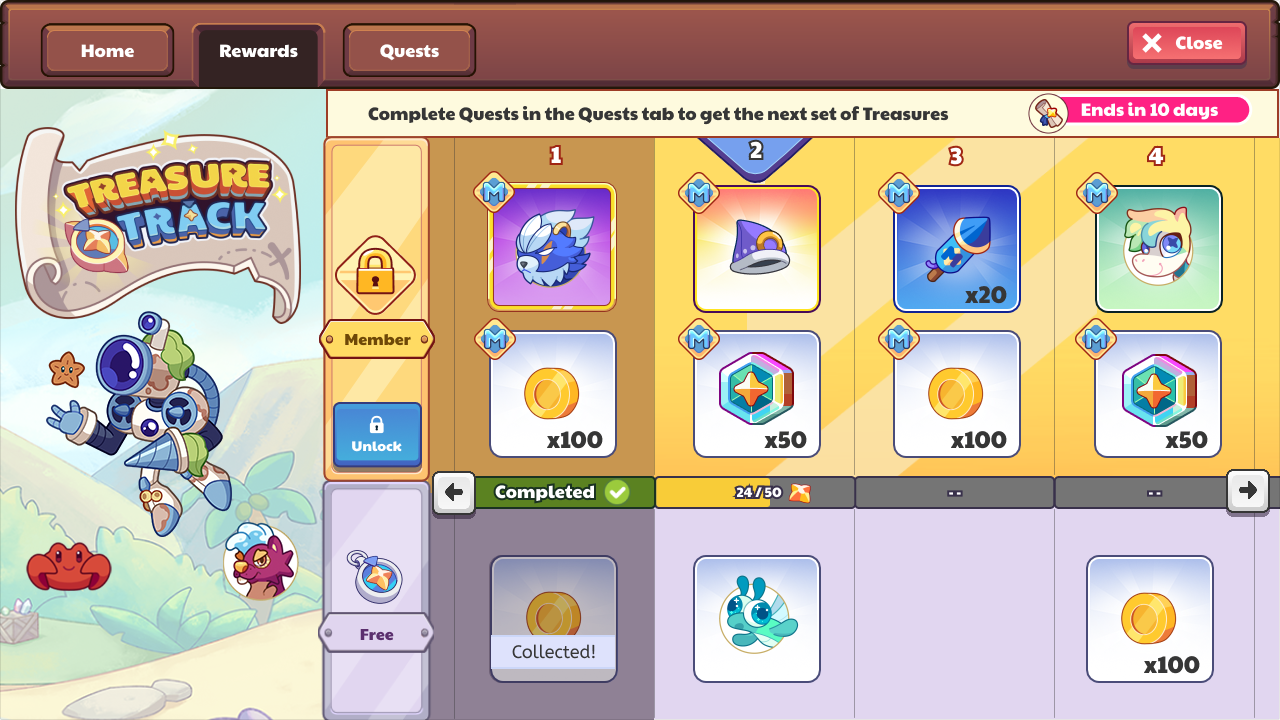
Phase 3
The third iteration split the paid tier into two separate options to support Prodigy’s expanded, subscription-based membership model. The goal was to increase ASP (average selling price) by encouraging players not only to convert, but to opt into higher-priced packages.
To support this, we influenced subscription decisions not only through subscription-locked rewards within the track itself, but also through a new left-panel hard currency offer that reinforced the added value of the higher tiers.
As with previous updates, we intentionally kept visual changes to the main track screen to a minimum to preserve player familiarity with the existing user flow
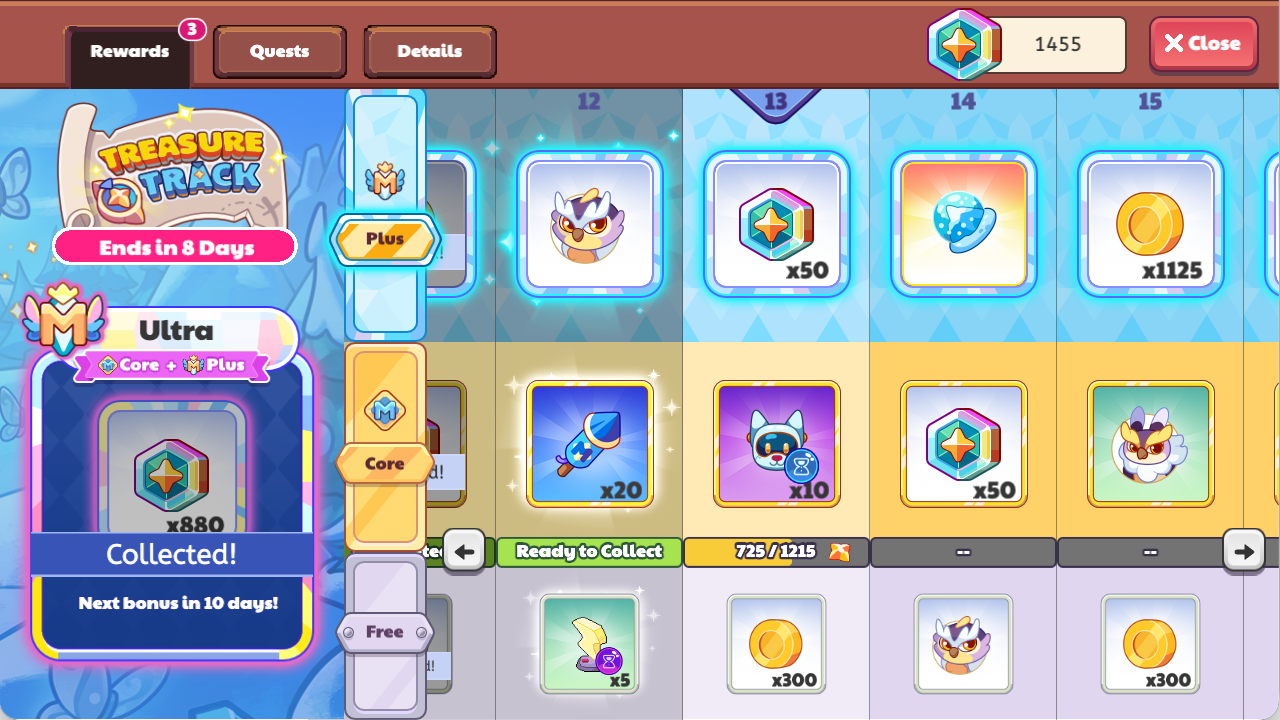
Structuring gameplay around quests
What we assumed
Quests can help shape a player’s game session. Players who are engaged with the system often plan their session around a specific quest they want to complete. In iteration two, we assumed that players, motivated by the rewards in the Treasure Track, would start their session by deciding which quest to focus on during that play session.
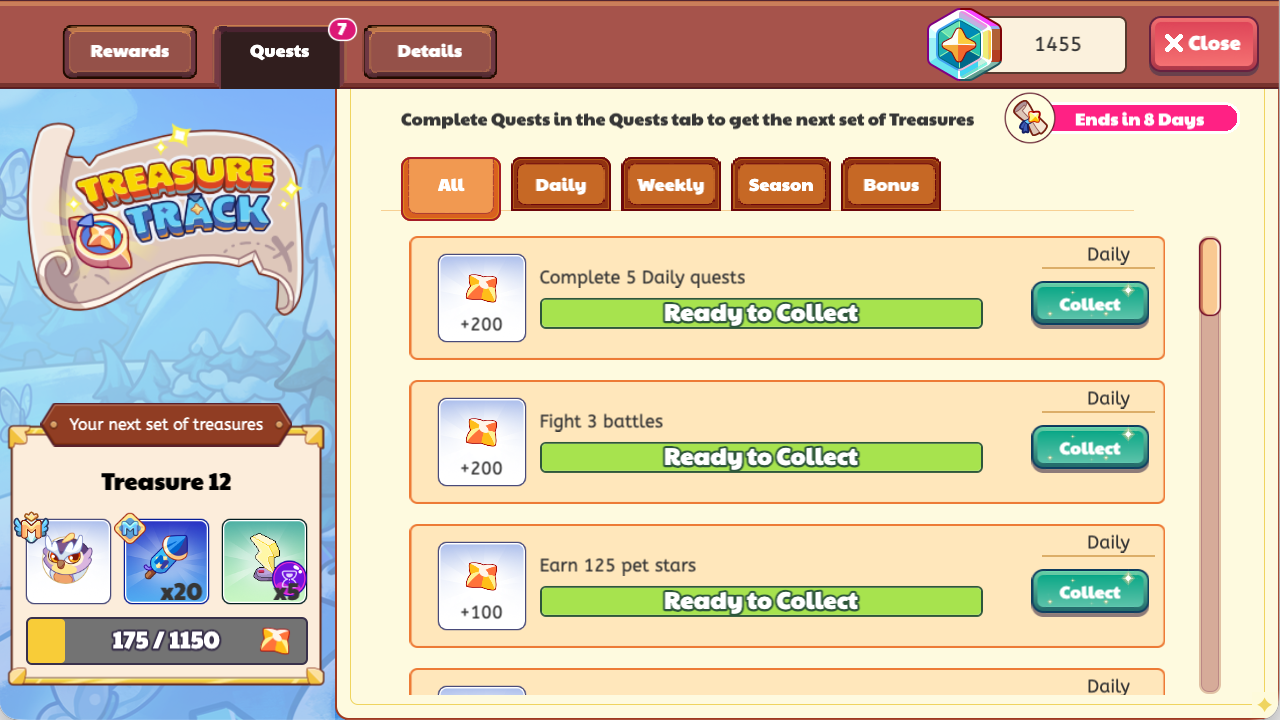
Quest Screen Introduced in Version 2
What we noticed
Some qualitative analysis lead us to believe that our younger players didn’t plan out their game sessions in the way we assumed. This large group of players were motivated by a variety of things when they entered the game, such as battling, exploring the world, or buying pets and gear from the shop.
We noticed these players started a session focused on one of these other mechanics and stayed engaged with it until their interest for it faded. Once that happened, they naturally moved on to their next favourite activity. It was only when the urge to collect a reward kicked in that they checked the Treasure Track—first to see if there’s a reward to claim, and then to look see if there were any quests that they might have passively completed.
More tier options will increase conversion numbers
What we assumed
Increasing the number of membership tiers and reward tracks would give families on smaller budgets an easier entry point to conversion and those with bigger budgets that don’t mind spending on an educational product for their child would lean towards the higher priced package.
What we actually noticed
Increasing the number of reward tracks and membership tiers made it harder for players and parents to understand how to become a member. Kids struggled to explain the differences between tiers to their parents, and parents were often unsure which tier to choose or what they were getting for the price.
A common thing we heard from players was that they believed the Treasure Track was a members-only feature. The common phrase we heard in our user interviews was “every time I try to collect something, it wants me to become a member”
Key Takeaway
The goal of Treasure Track was to increase conversion metrics and overall engagement with the game. Each iteration of the Treasure Track showed initial success in moving those numbers up. What started as semi monthly events, is now a monthly LiveOps feature with no downtime.
However, Parents who gravitate toward educational games like Prodigy often limit younger children’s access to traditional mobile games due to concerns around addictive design patterns and constant pressure to make in-app purchases.
As a result, designing for younger players requires meeting them where they are in their understanding and experience of games. Features that succeed in more mature titles don’t automatically translate to younger audiences—many of whom may be encountering video games for the first time.
Building around their needs, expectations, and learning curves, rather than copying proven patterns, is critical to creating experiences that are understandable, engaging, and sustainable.